Tech Tools for Space Optimization Apps for a Minimalist Lifestyle
Discovering the Intersection of Technology and Minimalism
In an era where digital clutter competes with physical chaos, **technology emerges as a powerful ally** for those seeking to embrace a minimalist lifestyle. The essence of minimalism revolves around **simplifying life by reducing excess**—be it in our possessions, time management, or even mental space. By leveraging the right tools and applications, individuals can streamline their lives, making conscious choices that prioritize quality over quantity.
The Role of Technology in Personal Organization
As society becomes increasingly fast-paced, maintaining an organized life can feel daunting. Fortunately, **innovative technology offers solutions that promote clarity and efficiency**. Here are some key aspects to consider:
- Digital decluttering: Apps that help you evaluate possessions.
- Time management: Tools that aid in scheduling and prioritization.
- Space optimization: Programs that assist in maximizing living areas.
In this article, we’ll delve into the **Top 5 tools and apps** that can significantly enhance your journey toward a minimalist lifestyle. Prepare to uncover how these innovations can transform everyday tasks and foster a serene, ordered environment conducive to personal growth and contentment.
Top 5 Tools and Apps for Optimizing Spaces in a Minimalist Lifestyle
In today’s fast-paced world, the desire for simplicity and organization is more prevalent than ever. Many individuals are drawn to the minimalist lifestyle, which emphasizes intentional living, reducing clutter, and maximizing functionality in physical and digital spaces. Fortunately, technology plays a significant role in facilitating this lifestyle, providing innovative tools and apps that help individuals streamline their environments. In this article, we dive deeper into the top five technologies that are essential companions for anyone aiming for a more minimalist life.
5. Room Arranger
Starting our list is Room Arranger, a dynamic tool designed to help users visualize their spaces creatively. This software is not just about moving virtual furniture; it’s a powerful means to rethink how space is used. With the ability to craft an exact floor plan of any room, users can anticipate how different arrangements will affect both movement and aesthetics. Imagine the benefit of knowing exactly where your new sofa fits best before moving it physically, thus saving time and effort.
Moreover, Room Arranger shines in its user-friendly design. The intuitive drag-and-drop functionality means anyone can redesign their space without prior expertise in design or technology. This ease of use makes it accessible to anyone looking to optimize their environment for both utility and beauty. By digitalizing this process, users can focus on removing items that do not contribute to their space or well-being, reinforcing the minimalist ethos of cherishing only what is essential or sparks joy.
- Visual Planning: Design and plan your space cleverly without physical exertion.
- Flexibility: Experiment with diverse layouts effortlessly.
- Efficiency: Reduce the time and energy spent on room rearrangement by visualizing changes beforehand.
4. Notion
At number four is Notion, a versatile productivity platform that brings multiple organizational functions under one roof. Though initially not designed for space organization, its customizable features make it indispensable for minimalists. In an age where life is a series of tasks, notes, and documents, Notion provides a way to integrate these elements seamlessly.
One of the app’s standout features for minimalists is its ability to create customized databases. This tool allows you to inventory and manage your possessions digitally, aiding in decluttering your physical space. Maintaining a digital inventory can reveal overlooked items that may no longer serve their purpose, helping you decide what to keep and what to part with. Furthermore, Notion’s robust options for text, images, and database entries mean you can design a system that precisely fits your needs, whether personal or shared with others like family members or roommates.
- Customizable Templates: Create a workspace that reflects your unique needs for organization and productivity.
- Team Collaboration: Easily manage and share tasks and notes collaboratively.
- Integrated Workflows: Consolidate different organizational elements within the same platform for regular review.
3. Google Drive
Google Drive takes the third spot on our list as a quintessential tool for those practicing digital minimalism. In a world where physical papers are increasingly obsolete, moving information to the cloud lightens physical load and simplifies organization. Google Drive offers a straightforward way to store, organize, and retrieve documents from anywhere at any time, making it a core component for minimalist practitioners.
With the capacity for effortless categorization and searchability, users can quickly access essential documents without the hassle of physical storage. The collaborative aspect of Google Drive is another valuable feature, allowing multiple users to work on documents simultaneously. This aspect is crucial for maintaining both personal and professional efficiency while avoiding unnecessary clutter or duplication of effort. Add to this the robust security measures provided by Google, and you’ve got a reliable way to protect your information while keeping your workspace minimal.
- Accessibility: Access your files universally from any device with internet access.
- Collaboration: Facilitate real-time document collaboration and sharing.
- Security: Ensure the safety and confidentiality of your digital documents.
2. Todoist
Our runner-up is Todoist, a task management app that exemplifies the minimalist principle of prioritizing fewer commitments but executing them well. Todoist offers users the ability to manage both personal and professional tasks with precision, reducing the disarray that comes with juggling multiple to-do lists.
The app allows users to break projects into manageable tasks, avoiding the chaotic overload of an unmanageable to-do list. By prioritizing essential tasks, Todoist helps maintain focus on important activities and responsibilities, reflecting minimalism’s emphasis on value and quality. Additionally, its integration with various applications and platforms enhances productivity, offering seamless synchronization across devices and workspaces. This comprehensive task management ultimately leads to a clutter-free mental space, allowing more room to enjoy life’s simpler pleasures.
- Task Prioritization: Organize and prioritize tasks by deadlines and importance.
- Integration: Integrate smoothly with other applications for unified productivity.
- User-Friendly Interface: Experience an intuitive platform encouraging consistent and effective use.
1. Marie Kondo’s Tidying Up App
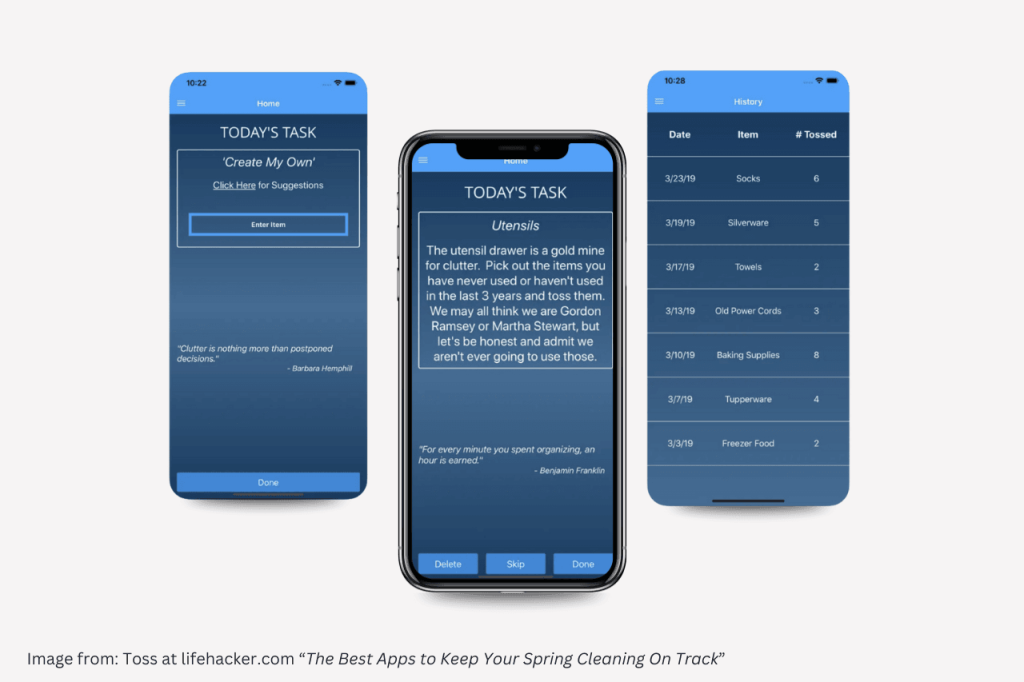
Claiming the top spot is the Tidying Up app by Marie Kondo, inspired by the bestselling KonMari Method. This app revolutionizes the decluttering process by focusing on emotional connections to belongings, rather than just utilitarian value. Guided by the principle of keeping only what sparks joy, users are encouraged to curate their space in a way that promotes peace and satisfaction.
The Tidying Up app offers a structured approach, walking users through each step of the decluttering process with motivational support and practical tips. It’s not just about physical items; the app also inspires users to consider the impact of emotional and sentimental items on their overall state of mind. By employing the KonMari method, users can transform their environments into havens of tranquility, aligning perfectly with a minimalist lifestyle that values experiences over possessions.
- Joy-Centric Approach: Prioritize keeping items that bring happiness while letting go of others.
- Step-by-Step Guides: Ease the process of decluttering with organized guidelines and tips.
- Motivational Support: Receive encouragement and inspiration to continue the decluttering journey.
In conclusion, the confluence of technology and minimalist principles offers powerful solutions for those seeking to optimize their spaces. From visual room planning to mindful decluttering methodologies, these top five tools and apps provide diverse methods to enhance organization and simplify living. Embracing these digital aids can facilitate not only a cleaner physical environment but also enrich personal and mental clarity, embodying the true spirit of minimalism.
| Category | Details |
|---|---|
| Smart Home Devices | These devices, such as smart speakers and automated lighting systems, facilitate a minimalist lifestyle by reducing clutter and optimizing energy use. Controlling your home from one device reduces the need for multiple tools and remotes. |
| Space-Saving Applications | Applications like RoomSketcher or Planner 5D allow users to visualize how furniture and belongings will fit in a space before moving items. This minimizes wasted effort and creates a more efficient living environment. |
| Organization Apps | Apps like Trello and Todoist help in streamlining daily tasks and organizing priorities, encouraging a minimalist approach to productivity and helping individuals avoid overwhelming clutter in both physical and digital spaces. |
| Digital Decluttering Tools | Tools such as CCleaner and Google Drive promote a tidy and organized digital space by removing unnecessary files and offering solutions for storage management, which is essential in maintaining a minimalist digital lifestyle. |
The role of technology in optimizing space extends beyond hardware; it encompasses a variety of tools and applications designed to enhance daily living. By integrating these technologies, an individual drifts closer to the philosophy of minimalism—not just in their physical environment, but also in mental space and digital clutter. The digital age provides opportunities for organization and efficiency, paving the way for a harmonious life that reflects the essence of being minimalistic yet functional. Each application serves a unique purpose, contributing significantly to an environment that fosters productivity and peace, all while urging users to rethink their relationships with possessions and space. This convergence of technology and minimalism encourages a lifestyle where everything serves a necessity, inviting readers to explore avenues that facilitate a more thoughtful approach to consumption and living spaces. Embracing these tools offers the chance to cultivate an environment that is prone to fostering creativity and well-being, a state of mind that supports a less complicated life.
FAQ: The Role of Technology in Space Optimization for a Minimalist Lifestyle
What are some key technologies that help in optimizing living spaces for a minimalist lifestyle?
Several technologies can promote spatial efficiency, starting with smart home devices. Products like smart thermostats and automated lighting reduce energy usage and clutter. Additionally, augmented reality (AR) applications allow users to visualize and plan room layouts efficiently. These tools help maximize space without physical rearrangement. Meanwhile, cloud storage solutions allow for the digital organization of documents, reducing the need for physical storage. Each of these technologies facilitates a cleaner, more harmonious living environment.
How do mobile apps contribute to space optimization in minimalism?
Mobile applications greatly aid the minimalist journey by providing digital solutions to everyday tasks. For instance, organization apps such as note-taking and task management tools replace traditional paper-based methods, freeing up physical space. Moreover, apps designed for inventory management can help track and declutter possessions efficiently, ensuring you only keep what’s necessary. These digital alternatives not only save space but also time, enhancing productivity and promoting a minimalist lifestyle.
Are there any privacy concerns with using smart devices for home optimization?
While smart devices offer numerous advantages for home optimization, they also raise valid privacy concerns. These devices collect data to function and provide personalized experiences. Ensuring your home network is secure is crucial to prevent unauthorized access. Regularly updating your devices and using strong, unique passwords is a recommended practice. Additionally, reviewing privacy settings and the terms of service for each device can safeguard your personal information against potential breaches.
Can technology help reduce stress associated with maintaining a minimalist space?
Indeed, technology can significantly alleviate stress related to minimalist living by simplifying organizational tasks. Automated systems can manage mundane household tasks, and digital assistants can schedule maintenance activities effectively. Furthermore, many apps offer guided meditation and wellness activities, promoting mental well-being and reducing stress. By offloading repetitive tasks to technology, individuals can focus more on relaxation and personal growth, aligning with minimalist values.
Conclusion
In today’s fast-paced world, where space and time are often at a premium, the intersection of technology and minimalism offers a promising solution. Throughout this article, we have explored the various ways in which digital tools and applications can aid in creating a more organized and minimalist lifestyle. The integration of smart storage solutions, efficient layout planning apps, and advanced inventory management systems plays a crucial role in optimizing personal spaces.
Key takeaways include the ability of technology to streamline possessions through digital decluttering and effective item tracking. Furthermore, habit and task management apps encourage mindful consumption, ensuring that every acquisition serves a purpose and adheres to the minimalist ethos. By leveraging these technological advancements, individuals can achieve not only physical de-cluttering but also mental clarity.
The importance of this topic cannot be overstated, as it offers a pathway to a lifestyle that emphasizes quality over quantity. For those seeking to embrace minimalism, technology serves as an indispensable ally, enabling them to make more informed choices and maintain a serene and organized living environment. As we look forward, the role of technology in personal organization will likely continue to evolve, offering ever more sophisticated solutions to our spatial challenges.
In essence, the strategic application of technology empowers individuals to focus on what truly matters, fostering a living space that reflects their values and priorities. As the synergy between minimalism and technology grows, so too do the possibilities for creating harmonious and efficient living environments. This marriage of digital innovation and minimalist philosophy is not only intriguing but also crucial for those committed to a more intentional and balanced way of life.
Related posts:
The Role of Multi-Functional Furniture in Minimalist Design
The Impact of Color Choices on Space Perception in Minimalist Design
The Minimalist Approach to Home Gyms: Space Optimization for Fitness Enthusiasts
Optimal Storage Solutions: Organizing Your Space with a Minimalist Mindset
The Psychology of Decluttering: How Space Optimization Enhances Mental Clarity and Focus in Minimali...
Embracing Minimalism in Shared Living: Space Optimization for Harmony

Linda Carter is a writer and organization expert specializing in minimalism and personal organization. With extensive experience helping individuals create clutter-free, functional spaces and adopt mindful habits, Linda shares her knowledge on our platform. Her goal is to empower readers with practical advice and strategies to simplify their lives, stay organized, and achieve a sense of calm and balance in their daily routines.